






The Central Bank of Nigeria's Baseline Standards for Automated AML Solutions have moved from expectation to execution.
Following the submission of institutional roadmaps on 10 June 2026, regulated institutions are now accountable for delivering against commitments across 12 functional areas, with implementation milestones extending through 2027 and 2028.
For many institutions, the challenge is no longer understanding the requirement—it is building the technology, governance, data, and operating capabilities needed to deliver.
NAMLI 2026 brings together senior compliance, risk, technology, and financial crime leaders to address that implementation challenge.
A submitted roadmap is a commitment—not the completion of the journey.
Institutions are now entering the most challenging phase: turning regulatory commitments into sustainable operational capability. This requires more than policy updates; it requires effective integration between systems, stronger governance frameworks, reliable data environments, and implementation models capable of withstanding supervisory scrutiny.
Across the sector, institutions are addressing challenges around KYC and KYB integration, AI-assisted AML solutions, transaction monitoring effectiveness, alert management, and the governance structures required to support increasingly technology-driven compliance environments.
The question is no longer whether institutions understand the CBN’s expectations. The question is whether they are ready to deliver.
NAMLI is Nigeria’s executive programme dedicated to translating the CBN’s automated AML requirements into practical institutional delivery.
This is not a traditional conference. NAMLI is a working executive forum designed for leaders responsible for AML strategy, compliance transformation, technology enablement, and risk governance.
Over two intensive days, participants will examine the practical realities of implementing the CBN’s 12 functional standards, including supervisory expectations following roadmap submission, AI governance and validation, systems integration, transaction monitoring, vendor oversight, and the execution frameworks required to deliver sustainable compliance outcomes.
NAMLI is designed for senior professionals responsible for shaping and delivering AML capability within their institutions, including Chief Compliance Officers, Chief Risk Officers, Chief Technology Officers, Heads of Financial Crime, Heads of AML, Heads of Compliance, and technology leaders supporting financial crime transformation.
Participants will gain practical perspectives, implementation insights, and peer-level engagement focused on one central challenge: moving from regulatory commitment to operational reality.
Nigeria AML Intensive (NAMLI) is designed for execution, not observation. Every session is implementation-driven, producing tangible institutional outputs — insight without delivery is not NAMLI.
NAMLI is regulator-aligned by design, embedding CBN, NFIU, and supervisory expectations directly into the programme architecture rather than interpreting them retrospectively.
NAMLI sessions are practitioner-led, with senior global, continental and domestic practitioners who have solved these challenges in real institutions guiding the sessions — not vendors or theorists.
Rooted in execution: participants leave with defined deliverables, including gap registers, implementation roadmaps, and a NAMLI Compact - a mechanism that makes NAMLI a sector governance institution.
NAMLI is cross-institutional, convening peers facing equivalent regulatory and operational constraints so that solutions are developed in context, not in isolation.
LEARN MORE
LEARN MORE
LEARN MORE
LEARN MORE
LEARN MORE
LEARN MORE
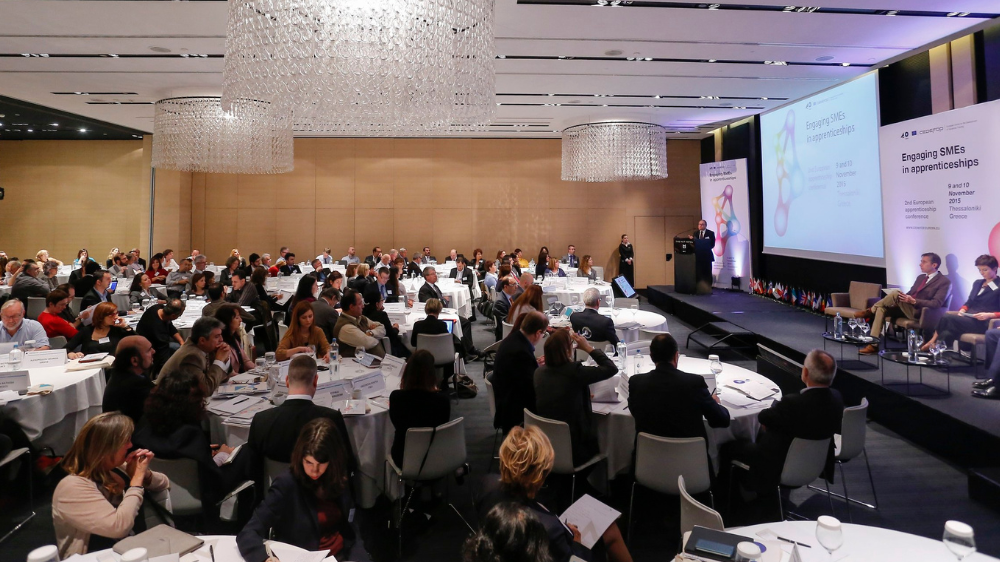
Whether participating as a delegate shaping your institution’s implementation roadmap or as a partner supporting sector-wide execution, your participation and partnership allocations are selectively curated to ensure institutional relevance, technical depth, and meaningful engagement.
NAMLI is designed for:
Places are limited and reviewed for seniority and institutional fit.
Understand exactly where your institution stands against the CBN’s 12 functional areas — and what the gap will cost if left unaddressed before the 2027 and 2028 deadlines close in..
Build the execution architecture that turns a submitted roadmap into a delivered compliance programme — covering KYC/KYB integration, AI governance, and alert frameworks that withstand supervisory scrutiny.
GAIN practical frameworks for sequencing your implementation, resourcing your delivery, and communicating credible progress to your board and to the regulator.
CONNECT with the senior compliance, risk, and technology leaders who are setting Nigeria’s AML standard — and leave with the practitioner relationships that make institutional delivery possible.
Systems Investing in Nigeria 2027 (SING 2027) represents a strategic shift from fragmented, project-based financing toward a systems-scale investment approach. Integrating sustainable finance, transition finance, climate-resilient infrastructure, natural capital, and the blue economy, the programme provides a unified framework for addressing interconnected challenges across energy, water, food security, industrialisation, logistics, housing, and urbanisation. Designed to move beyond traditional investment silos, SING 2027 equips institutional investors, policymakers, development finance actors, and private-sector leaders with the strategic, financial, and operational tools required to deploy capital into complex, large-scale industrial and infrastructure ecosystems across Nigeria and the broader African continent.
LEARN MORENew membership are not allowed.